
What Happens If a Collector Doesn’t Notify You Before Suing?
- Author: Mike Weston
- Last Modified: August 16, 2026
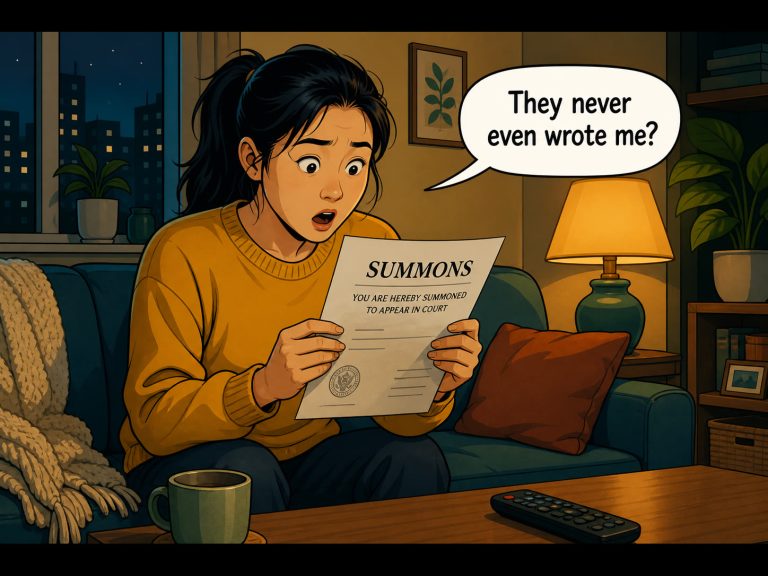
If a collector doesn’t notify you before suing, the lawsuit may still be valid. In many debt cases, a creditor, debt buyer, or collection agency does not always have to send a warning letter, demand letter, or final notice before filing a lawsuit. The more important issue is whether you were properly served with the lawsuit papers after the case was filed.
That distinction matters. A collector may not have to warn you before suing, but it generally must follow court rules for notifying you that a lawsuit exists. If you receive a summons and complaint, you should not ignore it just because you never received a pre-lawsuit notice. If you fail to respond, the collector may ask for a default judgment, which can lead to wage garnishment in most states, bank account garnishment, post-judgment interest, and long-term collection pressure.
Related Links
Table of Contents
📩 Pre-Lawsuit Notice Is Not Always Required
Many consumers believe a collector must send a final warning before filing a debt lawsuit. That is not always true. A collection agency may send letters or make calls before suing, but a missing warning letter does not automatically make the lawsuit invalid.
Some contracts, state laws, or specific types of debts may require certain notices before legal action. But in many ordinary credit card or consumer debt cases, the collector may be able to file suit without sending a separate “we are about to sue you” notice.
This can feel unfair, especially if the lawsuit is the first time you remember hearing about the account. But the court will usually focus on whether the plaintiff filed the lawsuit properly, served you properly, and can prove the debt. The lack of a pre-suit warning may be worth reviewing, but it is usually not a reason to ignore the case.
🧾 Collection Letters Are Different From Court Papers
A collection letter is not the same thing as a summons. A collection letter is usually a demand for payment. It may identify the current creditor, the original creditor, the balance, and your right to dispute the debt.
A summons and complaint, however, are court documents. They mean a lawsuit has been filed. The summons usually tells you the deadline to respond. The complaint explains what the plaintiff is claiming.
If you never received a collection letter but did receive a summons, the lawsuit is already active. Your next step is not to wait for the collector to “verify” the debt by mail. Your next step is to defend the lawsuit before the court deadline.
🏛️ The Real Notice That Matters Is Service of Process
The most important notice in a debt lawsuit is usually service of process. This is the formal delivery of lawsuit papers after the case has been filed.
Service rules vary by state, but the goal is to give you official notice that you have been sued and an opportunity to respond. This may involve personal service, certified mail, delivery to a proper person at your residence, or another method allowed by the court.
If the collector did not notify you before suing but did properly serve you afterward, the case may proceed. If the collector filed the lawsuit and never properly served you, that is a different and much more serious issue.
Bad service can sometimes be used to challenge a default judgment, especially if you never had a fair chance to respond.
🕵️ What If You Never Received Any Papers?
If you first learn about the lawsuit after a judgment, garnishment, bank freeze, or court notice, you should immediately investigate whether you were properly served.
Get a copy of the court file. Look for the complaint, summons, return of service, affidavit of service, default judgment, and any documents showing how the plaintiff claimed you were notified.
Check the address used for service. Did you live there at the time? Was the person served someone who could legally accept papers for you? Does the description match you or anyone in your household? Were the papers sent to an old address, a relative’s house, or somewhere you never lived?
If service was incorrect, you may be able to ask the court to set aside or vacate the judgment. That usually does not erase the debt automatically, but it may reopen the case and give you a chance to defend yourself.
🧠 Do Not Confuse “No Warning” With “No Defense”
A collector’s failure to warn you before suing may not defeat the case by itself. But that does not mean the collector automatically wins.
You may still have defenses. The debt may not be yours. The amount may be wrong. The account may be too old. Fees or interest may be unsupported. The plaintiff may be a debt buyer that cannot prove it owns the account. The collector may have sued the wrong person, used the wrong balance, or filed without the records needed to win.
The key is to separate two questions. First, did the collector have to notify you before filing? Second, can the collector prove the lawsuit now that it has been filed?
Even if the first issue is not enough to dismiss the case, the second issue may still matter a lot.
📚 The Collector Still Has to Prove the Debt
In a debt lawsuit, the plaintiff generally must prove its case by a preponderance of the evidence. That means the collector must show it is more likely than not that you owe the debt, that the amount is accurate, and that the plaintiff has the right to sue. In simple terms, the collector must prove the case by more than 50%.
This does not mean the collector needs every monthly statement ever created. It also does not always mean the collector needs a signed contract with your handwritten signature. In credit card cases, the plaintiff may use account statements, payment histories, cardmember agreements, charge-off records, affidavits, business records, and evidence showing the account was used.
An unsigned contract may still be used as evidence in some cases. But the plaintiff still needs enough reliable proof to connect the account to you, show the correct balance, and establish that the company suing you has the right to collect.
🔗 Debt Buyer Lawsuits Need Extra Review
If the plaintiff is a debt buyer, the lack of prior notice may be only one part of the problem. Debt buyers often purchase charged-off accounts from original creditors or other debt buyers. By the time the lawsuit is filed, the company suing you may be unfamiliar.
A debt buyer generally needs to prove chain of title. Chain of title is the paper trail showing how the debt moved from the original creditor to the current plaintiff. If the account was sold more than once, each transfer may matter.
A debt buyer may have a bill of sale showing that a group of accounts was purchased, but that does not always prove your specific account was included. Missing account schedules, vague assignments, mismatched balances, or incomplete records can create problems for the plaintiff.
If you did not receive notice before suit and do not recognize the company suing you, you should look closely at whether the plaintiff can prove ownership.
⏰ Respond Before the Deadline
Once you receive lawsuit papers, the court deadline becomes the priority. Do not wait for the collector to send more letters. Do not assume the case is defective because you never got advance warning. Do not call the collection law firm and treat that conversation as your court response.
You usually need to file an answer or other response with the court. Your response may deny the debt, dispute the balance, challenge the plaintiff’s ownership, raise statute of limitations issues, object to unsupported fees, or identify service problems if they exist.
Missing the deadline can lead to a default judgment. A default judgment may allow the plaintiff to win without a full trial because you did not respond. That is exactly what you want to avoid.
🧰 Gather Documents That Show the Full Story
If you were sued without prior notice, start collecting documents immediately. Keep the summons, complaint, envelopes, court notices, collection letters, credit reports, old statements, payment records, settlement offers, and any emails or texts from collectors.
If you never received earlier collection letters, make a note of that. If the lawsuit was sent to an old address, gather proof of where you lived. If you do not recognize the account, gather credit reports, identity theft reports, address history, and records showing why the account may not belong to you.
You should also review whether the lawsuit includes added fees, interest, attorney’s fees, or court costs. The plaintiff may request those amounts, but it still needs a legal basis to recover them.
🤝 Why Hiring Someone Like Weston Legal Can Be a Good Idea
Hiring someone like Weston Legal can be a good idea when a collector sues without prior notice. These cases can move quickly, and the difference between a weak lawsuit and a judgment may be whether you respond properly and challenge the right issues.
A debt relief law firm like Weston Legal may be able to review the lawsuit, determine whether service was proper, identify the plaintiff, evaluate the balance, challenge debt buyer paperwork, request missing documents, and respond before a default judgment is entered.
This can be especially helpful when the collector is relying on old records, incomplete statements, a debt buyer affidavit, or a confusing chain of title. Weston Legal may help determine whether the plaintiff can actually prove the debt, the amount, and the right to sue.
Legal help can also protect you from common mistakes. Many consumers assume no warning means no lawsuit, wait too long, call the collector instead of answering the court, or agree to a judgment without understanding what happens next.
🚨 Why Judgment Is the Bigger Danger
The lawsuit is serious, but the judgment is usually the biggest threat. Once a judgment is entered, the creditor or debt buyer may gain stronger collection tools.
In most states, wages can be garnished after judgment. Bank accounts can also be garnished in many states, which can create immediate financial stress if money for rent, food, utilities, or transportation is frozen.
Judgments can also grow because of post-judgment interest. That means the amount owed may increase after the lawsuit ends. Court costs, attorney’s fees, and collection expenses may also add to the total depending on the case.
This is why a lawsuit should be addressed even if the collector never sent a warning letter before filing.
🔒 What You Should Do Next
If a collector doesn’t notify you before suing, the lawsuit may still move forward. A missing pre-lawsuit warning does not automatically defeat the case. The more important questions are whether you were properly served, whether the plaintiff can prove the debt, and whether the amount claimed is legally supported.
Do not ignore the lawsuit because you were surprised by it. Respond before the deadline, gather your documents, check service, review the plaintiff’s proof, and look closely at any debt buyer chain of title issues.
Hiring someone like Weston Legal can help you move from confusion to a defense strategy. Acting quickly may help prevent a default judgment, protect your paycheck and bank account, and keep an unexpected lawsuit from turning into long-term collection pressure.
🧑💼 Who Files These Lawsuits?
Lawsuits that lead to judgments and bank account freezes are often filed by debt buyers, such as:
These companies often purchase old debts and then file lawsuits to get judgments. With a judgment in hand, they can pursue garnishment.
📈 What Original Creditors Might Be Behind the Debt?
Original creditors may also file lawsuits or sell debts to collectors. Common names include:
If they sue and win, they may pursue garnishment directly or assign the judgment to a collection firm.

Mike Weston is a seasoned debt lawsuit defense attorney and founder of Weston Legal. Since 2005, Mike has devoted his career to compassionately helping consumers struggling with issues involving their personal and business debts. Mike is grateful to have been able to help tens of thousands of clients become empowered with knowledge on the path to financial stability.
Meet some of our Lawsuit Staff
Michael

Jessica

Andrew

Courtney

Trent

Reem
