
How to Request Verification of the Debt After a Lawsuit Is Filed
- Author: Mike Weston
- Last Modified: August 16, 2026
If a debt lawsuit has already been filed, it is usually too late to rely on a normal debt verification request as your main response. At that point, the issue is no longer just a collection letter or phone call. The creditor, debt buyer, or collection agency has moved the matter into court, and you need to defend the lawsuit.
This does not mean you cannot demand proof. You absolutely can still require the plaintiff to prove the debt, the amount, and the right to sue. But after a lawsuit is filed, the better tool is usually a court response, discovery requests, motions, evidence objections, and case strategy. Sending a debt verification letter to the collector is not the same as filing an answer with the court. If you miss the court deadline, the plaintiff may seek a default judgment, which can lead to wage garnishment in most states, bank account garnishment, post-judgment interest, and long-term collection pressure.
Related Links
Table of Contents
🕒 Why Verification Requests Are Usually Too Late After Suit
A debt verification request is commonly used before a lawsuit, when a collector first contacts you about a debt. It may ask the collector to verify the account, identify the creditor, explain the balance, or provide basic information about the debt.
Once the lawsuit is filed, however, the case is controlled by court deadlines. The summons and complaint usually tell you how long you have to respond. That deadline matters more than any letter you send to the collector.
Many consumers make the mistake of mailing a verification request after being served and then waiting for a response. That can be dangerous. The collector may not respond before the court deadline, and the court may still allow the plaintiff to request a default judgment if no answer is filed.
The practical point is simple: after suit is filed, do not treat verification as your defense. You need to defend the lawsuit directly.
📬 A Letter to the Collector Is Not a Court Answer
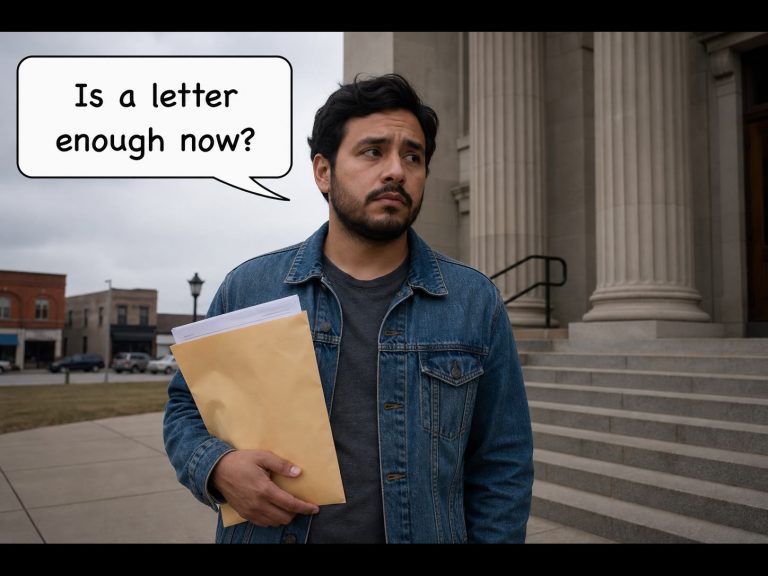
A debt verification letter may tell the collector that you dispute the debt, but it usually does not count as a formal answer in court. The court is looking for a response filed in the lawsuit, not just a letter mailed to the collection agency or law firm.
This distinction is critical. You may write a strong letter saying the debt is not yours, the amount is wrong, or the plaintiff lacks documents. But if you do not file the proper response with the court, the plaintiff may still argue that you failed to answer.
A court answer is where you respond to the allegations in the complaint. You may deny the debt, dispute the amount, challenge the plaintiff’s right to sue, raise statute of limitations issues, or identify other defenses. The exact format depends on the court, but the key is that the lawsuit must be handled inside the court case.
🧭 What You Should Do Instead
If you are sued, the first step is to read the summons and complaint carefully. Find the response deadline, the court name, the case number, the plaintiff’s name, the amount claimed, and the account information.
Next, decide how to respond. If you dispute the debt, the response should usually be made in the lawsuit. Do not assume the plaintiff will pause the case just because you mailed a verification request.
You should also save every document. Keep the lawsuit papers, envelopes, collection letters, account statements, payment records, credit reports, and any prior dispute letters. These records may help you challenge the plaintiff’s proof.
Once the lawsuit is active, you may still request documents, but you usually do that through discovery or other court procedures rather than a basic verification letter.
🧱 Verification Is Not the Same as Discovery
In discovery, you may be able to ask for the account agreement, billing statements, payment history, charge-off records, interest calculations, fee records, assignment documents, and records showing how the balance was calculated.
If the plaintiff is a debt buyer, discovery may be especially important. You may need documents showing the original creditor, each transfer of the account, and proof that your specific account was included in the sale.
Discovery is often more powerful than a verification letter because it is connected to the court case. If the plaintiff refuses to provide documents, there may be court procedures to address that refusal.
🔗 Debt Buyers Must Prove the Right to Sue
If the lawsuit was filed by a debt buyer, the plaintiff may need to prove more than just a balance. A debt buyer is not the original creditor. It claims that it bought the account and now has the right to collect.
That is where chain of title becomes important. Chain of title is the paper trail showing how the debt moved from the original creditor to the current plaintiff. If the debt was sold more than once, each transfer may matter.
A debt buyer may have a bill of sale showing that a group of accounts was sold, but that does not always prove your specific account was included. You may need to look for account schedules, assignment documents, purchase records, affidavits, and documents that clearly connect your account to the plaintiff.
If the debt buyer cannot prove ownership, it may have a serious problem. But you usually need to raise that issue in the lawsuit. A verification request alone may not be enough.
🧪 The Plaintiff Still Has the Burden of Proof
Even though it may be too late to rely on a standard verification request, the plaintiff still has to prove its case. In most debt lawsuits, the plaintiff must prove the claim by a preponderance of the evidence. That means it must show it is more likely than not that you owe the debt, that the amount is correct, and that the plaintiff has the right to sue.
This does not mean the creditor needs every account statement ever created. It also does not always mean the creditor needs a signed contract with your handwritten signature. In credit card lawsuits, a plaintiff may use billing statements, payment histories, cardmember agreements, charge-off records, business records, affidavits, and evidence showing the account was used.
An unsigned contract may still be used as evidence in some cases. But the plaintiff still has to connect the right account to the right person, prove the amount, and show that the company suing you is legally entitled to collect.
Your defense should focus on whether the plaintiff can actually meet that burden.
📝 What Documents to Request in the Lawsuit
If you want proof after a lawsuit is filed, request documents that matter to the case. Do not ask only for general verification. Ask for records that test the plaintiff’s claim.
Important documents may include the original agreement, cardmember terms, monthly statements, payment history, transaction records, charge-off statement, interest calculations, fee records, and the date of last payment.
If the plaintiff is a debt buyer, request the bill of sale, assignment agreements, purchase documents, account schedules, affidavits of sale, and any records showing your account was transferred to the plaintiff.
You should also look closely at fees and interest. If the lawsuit includes attorney’s fees, court costs, collection costs, or interest that does not appear in the agreement, those amounts may need to be challenged. A plaintiff should not get extra money just because it listed extra charges in the lawsuit.
🚧 Do Not Wait for Documents Before Responding
One of the worst mistakes is waiting for documents before filing a court response. Consumers often think, “I asked them to verify the debt, so I will answer after they send proof.” That can lead to default.
The court deadline usually does not stop just because you requested documents. Unless the court grants more time or the rules provide otherwise, you still need to respond by the deadline.
You can file a response disputing the claim and then seek documents through the lawsuit process. That protects you from default while still forcing the plaintiff to prove its case.
The lawsuit is the priority. Verification may be helpful before court, but once you have been sued, the main job is defending the case.
🧑💼 How Weston Legal May be Able to Help
Hiring someone like Weston Legal can be a very good idea when you have been sued and still want proof of the debt. At that stage, the issue is not simply sending a verification letter. The issue is building a defense strategy before judgment is entered.
A debt relief law firm like Weston Legal may be able to review the complaint, identify the plaintiff, determine whether the case involves an original creditor or debt buyer, file a proper response, request documents through discovery, challenge weak evidence, and negotiate when appropriate.
This is especially important if the plaintiff is a debt buyer. Weston Legal may be able to look for chain of title problems, missing account schedules, unsupported balances, vague affidavits, or documents that do not clearly show the plaintiff owns the account.
Legal help can also prevent common mistakes. Many consumers send letters but miss court deadlines, admit facts accidentally, agree to judgments without understanding the consequences, or fail to challenge documents properly. Someone like Weston Legal can help shift the focus from “please verify this debt” to “prove your case in court.”
⚠️ Why Ignoring the Lawsuit Is So Dangerous
If you ignore the lawsuit, the plaintiff may ask for a default judgment. A default judgment can happen because you failed to respond, not because the plaintiff fully proved every issue at trial.
Once a judgment is entered, the creditor or debt buyer may have stronger collection tools. In most states, wages can be garnished after judgment. Bank accounts can also be garnished in many states, which can cause serious financial problems if money for rent, groceries, utilities, or transportation is frozen.
Judgments can also grow over time because of post-judgment interest. That means the amount owed may increase after the case is over. Court costs, attorney’s fees, and collection expenses may also add to the total depending on the judgment and applicable law.
This is why a lawsuit should never be treated like an ordinary collection letter. Once court papers are served, you need to act.
🎯 The Real Priority After a Lawsuit Is Filed
After a lawsuit is filed, it is usually too late to depend on a basic debt verification request. You can still demand proof, but you should do it through the lawsuit process while protecting yourself from default.
The main priority is to respond to the court case on time. Then you can use discovery, document requests, motions, and evidence challenges to make the plaintiff prove the debt, the amount, and the right to sue.
The plaintiff does not need every statement or a signed contract in every case, and an unsigned agreement may still be used as evidence. But the plaintiff must still prove its claim by a preponderance of the evidence. If the case involves a debt buyer, chain of title and ownership documents may be major issues.
Hiring someone like Weston Legal can help you defend the lawsuit properly instead of relying on a verification letter that may no longer protect you. The goal is to stop a disputed debt from becoming a judgment that can lead to wage garnishment, bank account garnishment, post-judgment interest, and long-term collection pressure.
🧑💼 Who Files These Lawsuits?
Lawsuits that lead to judgments and bank account freezes are often filed by debt buyers, such as:
These companies often purchase old debts and then file lawsuits to get judgments. With a judgment in hand, they can pursue garnishment.
📈 What Original Creditors Might Be Behind the Debt?
Original creditors may also file lawsuits or sell debts to collectors. Common names include:
If they sue and win, they may pursue garnishment directly or assign the judgment to a collection firm.

Mike Weston is a seasoned debt lawsuit defense attorney and founder of Weston Legal. Since 2005, Mike has devoted his career to compassionately helping consumers struggling with issues involving their personal and business debts. Mike is grateful to have been able to help tens of thousands of clients become empowered with knowledge on the path to financial stability.
Meet some of our Lawsuit Staff
Michael

Jessica

Andrew

Courtney

Trent

Reem
