
What Happens If a Debt Collector Adds New Charges After Filing Suit?
- Author: Mike Weston
- Last Modified: April 7, 2026
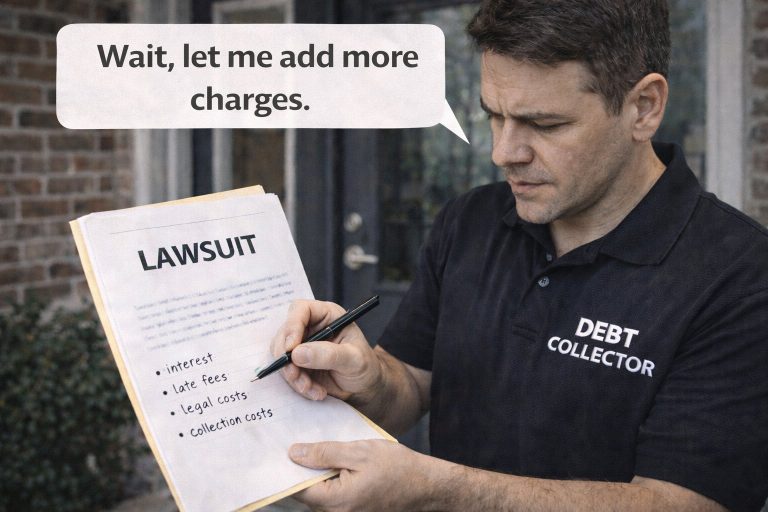
If a debt collector adds new charges after filing a lawsuit, it does not automatically mean those charges are valid. Once a case is filed, the amount claimed should generally be supported and properly calculated. Creditors cannot simply inflate the balance without legal justification. However, if you do not challenge the added charges, the court may still enter a judgment for the higher amount.
New fees, added interest, or unexplained charges can significantly increase your exposure. If the inflated total turns into a judgment, it may lead to wage garnishment, bank account freezes, and interest that continues growing over time. Addressing the issue early is critical.
Related Links
Table of Contents
📄 The Amount Claimed in the Complaint Matters
When a creditor files a lawsuit, the complaint typically states:
- The principal balance
- Accrued interest
- Attorney’s fees (if allowed)
- Court costs
- That amount becomes the baseline for the case.
If the creditor later attempts to increase the balance, they must generally justify it under the contract and applicable law.
Courts do not automatically approve added charges simply because they appear in later paperwork.
💰 Common Types of Added Charges
Collectors sometimes attempt to add:
- Additional interest
- Late fees
- Collection costs
- Attorney’s fees beyond what was originally claimed
- Post-filing charges
- Some of these may be allowed under certain contracts or statutes. Others may not.
- The key question is whether the charges are authorized and properly documented.
⚖️ Can Interest Continue After Filing Suit?
In many cases, interest may continue to accrue after a lawsuit is filed, depending on:
- The original contract terms
- State law
- Whether the creditor specifically requested ongoing interest
However, the creditor must clearly explain how interest is calculated. Unsupported or miscalculated interest can be challenged.
Once a judgment is entered, post-judgment interest usually applies automatically under state law. That is separate from pre-judgment interest.
Understanding the distinction is important.
🧾 What If They Add Attorney’s Fees?
Attorney’s fees are not always automatic.
Whether they can be added depends on:
- The original contract
- State law
- Whether the creditor requested them in the complaint
If fees were not requested initially, adding them later without proper procedure may be questionable.
You have the right to require documentation supporting any fee claim.
🚨 What Happens If You Do Nothing?
If you ignore the added charges and fail to respond properly:
- The court may accept the updated amount
- A default judgment may be entered
- Enforcement may be based on the inflated total
In most states, once judgment is entered, the creditor may pursue:
- 💵 Wage garnishment
🏦 Bank account garnishment
🏠 Property liens
📈 Ongoing interest
Allowing improper charges to become part of a judgment can increase long-term financial damage.
🔍 How to Challenge Added Charges
If you believe new charges are improper:
- Review the complaint and subsequent filings
- Compare the amounts listed
- File a timely Answer if you have not already
- Object to unsupported increases
- Request documentation explaining the additions
- The court will not independently audit the numbers unless the issue is raised.
- Procedural action matters more than informal disputes.
🤝 Can This Affect Settlement Negotiations?
Yes.
If added charges appear questionable, that may create leverage in negotiation.
Creditors may:
- Remove disputed fees
- Adjust interest calculations
- Offer a reduced settlement amount
However, any agreement should clearly state:
- The total amount resolving the case
- That the lawsuit will be dismissed upon payment
- Whether a judgment will be avoided
- Get everything in writing before making payment.
📈 Why This Matters Before Judgment
Once a judgment is entered, the amount becomes enforceable.
That means:
- Garnishment may be based on the increased figure
- Interest may continue to accumulate
- Collection efforts may last for years
Challenging improper charges before judgment is far easier than trying to undo them afterward.
🛑 Common Mistakes to Avoid
If you notice new charges after suit is filed, avoid:
- Assuming they are automatically valid
- Ignoring the case
- Waiting until garnishment begins
- Relying only on phone conversations
- Court filings—not verbal discussions—control the outcome.
👩⚖️ When Legal Guidance Can Help
Added charges often involve contract interpretation and procedural rules.
A debt relief attorney can:
- 🔍 Review whether the contract allows the charges
- 📑 Examine interest calculations
- ⚖️ Object to improper additions
- 💬 Negotiate a corrected settlement
- 🛡️ Protect you from inflated judgment amounts
Law firms such as Weston Legal focus on defending consumers in debt lawsuits and understand how creditors calculate balances during litigation.
Professional guidance may reduce the total amount you ultimately pay.
Protecting Yourself Before the Balance Grows
If a debt collector adds new charges after filing suit, you do not have to accept them automatically. The creditor must justify the increase, and you have the right to challenge unsupported amounts.
Ignoring the issue can result in a larger judgment, leading to wage garnishment, frozen bank accounts, and growing interest for years.
Taking prompt action—by reviewing the filings, responding properly, and considering legal guidance—can help protect your income and prevent inflated charges from becoming legally enforceable.
🧑💼 Who Obtains Judgments for Debt?
Lawsuits that lead to judgments and bank account freezes are often filed by debt buyers, such as:
These companies often purchase old debts and then file lawsuits to get judgments. With a judgment in hand, they can pursue garnishment.
📈 What Original Creditors Obtain Judgments
Original creditors may also file lawsuits or sell debts to collectors. Common names include:
If they sue and win, they may pursue garnishment directly or assign the judgment to a collection firm.
🧑⚖️ Consider a Debt Lawyer for Help
A debt defense attorney can:
- Review the evidence being used against you
- Challenge weak or missing documentation
- File legal motions to protect your rights
Weston Legal helps consumers fight back against debt lawsuits and protect their financial future.
📆 Final Takeaway
If you’re facing a debt lawsuit, don’t wait to take action. Understanding your rights is the first step toward protecting yourself.

Mike Weston is a seasoned debt lawsuit defense attorney and founder of Weston Legal. Since 2005, Mike has devoted his career to compassionately helping consumers struggling with issues involving their personal and business debts. Mike is grateful to have been able to help tens of thousands of clients become empowered with knowledge on the path to financial stability.
Meet some of our Lawsuit Staff
Michael

Jessica

Andrew

Courtney

Trent

Reem
