
Can a Debt Collector Take Your Tax Refund With a Judgment?

- Author: Mike Weston
- Last Modified: August 31, 2025
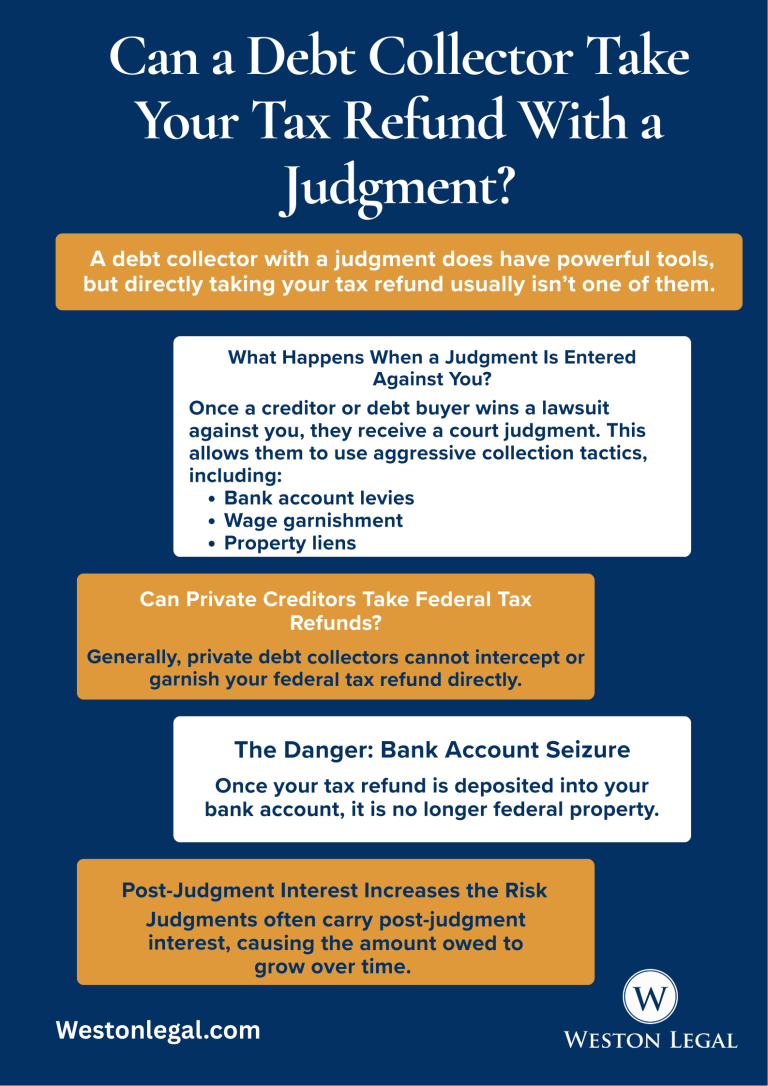
A debt collector with a judgment does have powerful tools, but directly taking your tax refund usually isn’t one of them. Tax refunds are disbursed by the federal government and are protected from most private debt collection efforts. However, there are ways collectors may still reach your refund indirectly.
If your refund is deposited into a bank account or used to pay bills, it can quickly become vulnerable to seizure. Creditors can freeze your account or garnish funds once they’re no longer considered government property. Understanding this timing is key to protecting your money.
Related Links
Table of Contents
🔒 What Happens When a Judgment Is Entered Against You?
Once a creditor or debt buyer wins a lawsuit against you, they receive a court judgment. This allows them to use aggressive collection tactics, including:
Bank account levies
Wage garnishment
Property liens
Judgments can come from debt buyers like:
Or original creditors like:
💶 Can Private Creditors Take Federal Tax Refunds?
Generally, private debt collectors cannot intercept or garnish your federal tax refund directly. Only government agencies can seize tax refunds before they reach you. Examples include:
IRS (for back taxes)
Department of Education (for defaulted student loans)
Child support enforcement
Private creditors don’t have this access—but they can act once the refund hits your bank account.
⚠️ The Danger: Bank Account Seizure
Once your tax refund is deposited into your bank account, it is no longer federal property. A creditor with a judgment can then:
Freeze your account
Withdraw funds to satisfy the judgment
This is why many consumers are caught off guard. Your refund is protected until it becomes part of your general bank balance.
🏛️ How Long Do They Have to Take It?
Judgments are enforceable for 10–20 years in most states and can often be renewed. That means debt collectors can seize your account at any point during that time if they learn you have funds.
This enforcement window is long—and often used to surprise consumers years after the original lawsuit.
🤝 How Can You Protect Your Refund?
Here are some ways to limit the risk:
Don’t deposit your refund into an account that has been previously frozen
Use a prepaid debit card to receive your refund (if applicable)
Withdraw the refund immediately after it clears
Consult with a debt relief attorney if you know a judgment is active
Timing is everything. Acting quickly can prevent a freeze and keep your funds accessible.
Empty headi
⏰ Post-Judgment Interest Increases the Risk
Judgments often carry post-judgment interest, causing the amount owed to grow over time. Even a small debt can balloon if ignored.
This gives collectors more motivation to pursue funds like tax refunds, bank deposits, or property over many years.
🚫 Don’t Ignore the Lawsuit
Many judgments result from default—when the consumer never responded to the lawsuit. Creditors only have to prove their case by a preponderance of the evidence, meaning they just need to show it’s more likely than not that the debt is owed.
They do not need a signed contract, only enough documentation to establish the claim. Debt buyers must also prove the chain of title, which can be challenged.
Ignoring a lawsuit allows them to win automatically. And that judgment can haunt your finances for years.
📋 Conclusion and Final Thoughts
While private debt collectors cannot directly take your tax refund, they can seize the money after it’s deposited in your account. With a judgment in hand, creditors can act quickly to garnish or freeze your funds.
Act early. Don’t ignore lawsuits, and seek legal guidance if you already have a judgment against you. Your refund could be at risk without the right protections in place.

Mike Weston is a seasoned debt lawsuit defense attorney and founder of Weston Legal. Since 2005, Mike has devoted his career to compassionately helping consumers struggling with issues involving their personal and business debts. Mike is grateful to have been able to help tens of thousands of clients become empowered with knowledge on the path to financial stability.
Meet some of our Lawsuit Staff
Michael

Jessica

Andrew

Courtney

Trent

Reem
