
What Happens When a Debt Buyer Can’t Prove Chain of Title
- Author: Mike Weston
- Last Modified: August 10, 2025
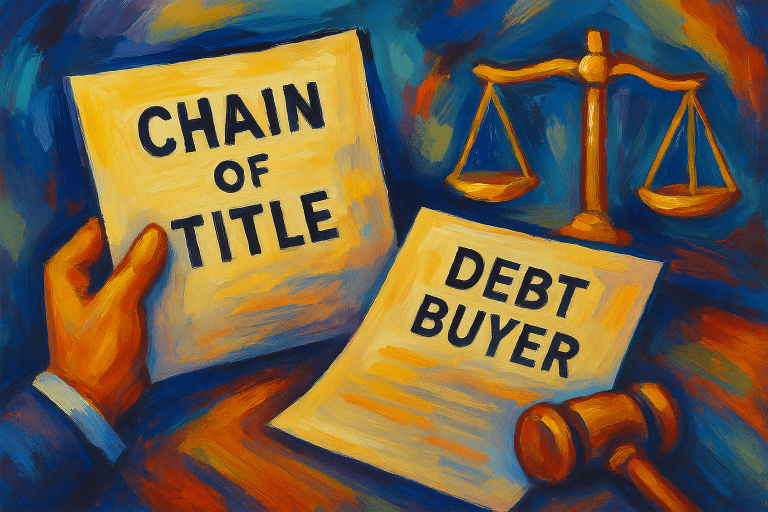
📜 When a debt buyer sues you, they must show they own the debt—and that means proving a valid chain of title. This is the paper trail showing the debt’s transfer from the original creditor to each subsequent owner, ending with the debt buyer. If they can’t produce these documents, their case can be severely weakened in court and a judgment entered in the Defendants favor.
⚖️ But here’s the catch: under the preponderance of the evidence standard, they only need to show it’s more likely than not that you owe the debt. Even with missing links in the chain, judges may still side with them if other account statements, billing records, or unsigned credit agreements suggest the debt is valid.
Related Links
Table of Contents
Understanding Chain of Title
📄 Chain of title is the documented history of who owned your debt at each stage. Debt buyers such as Portfolio Recovery Associates, Midland Credit Management, LVNV Funding LLC, Calvary SPV 1, Velocity Investments, and Jefferson Capital Systems purchase large bundles of accounts from banks and credit card companies. Each sale should have paperwork—often called a bill of sale or assignment—that identifies your specific account.
Why Missing Documents Can Be a Problem
🕵️ If a debt buyer lacks part of the chain of title, it opens the door to a legal challenge. You can question whether they truly have the right to sue. Missing or vague assignment records may cause the case to be dismissed—especially if you raise the issue early in the lawsuit.
Original creditors like Capital One Bank, Discover Bank, Citibank, Bank of America, Conns Appliances, American Express, JP Morgan Chase, and Synchrony Bank rarely face this problem because they never sold the account.
The Danger of Ignoring a Lawsuit
🚫 Even if the debt buyer’s paperwork is flawed, ignoring the lawsuit can still lead to a default judgment. That judgment may allow wage garnishment (in most states), bank account freezes, and property liens. Plus, post-judgment interest will cause the balance to grow over time.
By responding in court, you preserve your chance to challenge the chain of title and force the debt buyer to prove their case.
Conclusion
🔍 If a debt buyer can’t prove chain of title, you may have a defense—but only if you show up and raise it. Ignoring the lawsuit hands them a win they might not deserve.
How an Attorney Can Help
👨⚖️ A skilled debt relief attorney can challenge improper documentation, fight chain of title issues, and negotiate favorable settlements. Law firms like Weston Legal regularly defend clients against lawsuits from both original creditors and debt buyers, and can help protect your income and property from aggressive collection actions.

Mike Weston is a seasoned debt lawsuit defense attorney and founder of Weston Legal. Since 2005, Mike has devoted his career to compassionately helping consumers struggling with issues involving their personal and business debts. Mike is grateful to have been able to help tens of thousands of clients become empowered with knowledge on the path to financial stability.
Meet some of our Lawsuit Staff
Michael

Jessica

Andrew

Courtney

Trent

Reem
