
Do I Have to Go to Court for a Credit Card Lawsuit?
- Author: Mike Weston
- Last Modified: July 18, 2025
If you’ve been served with a lawsuit over credit card debt, one of your first questions might be:
Do I really have to go to court?
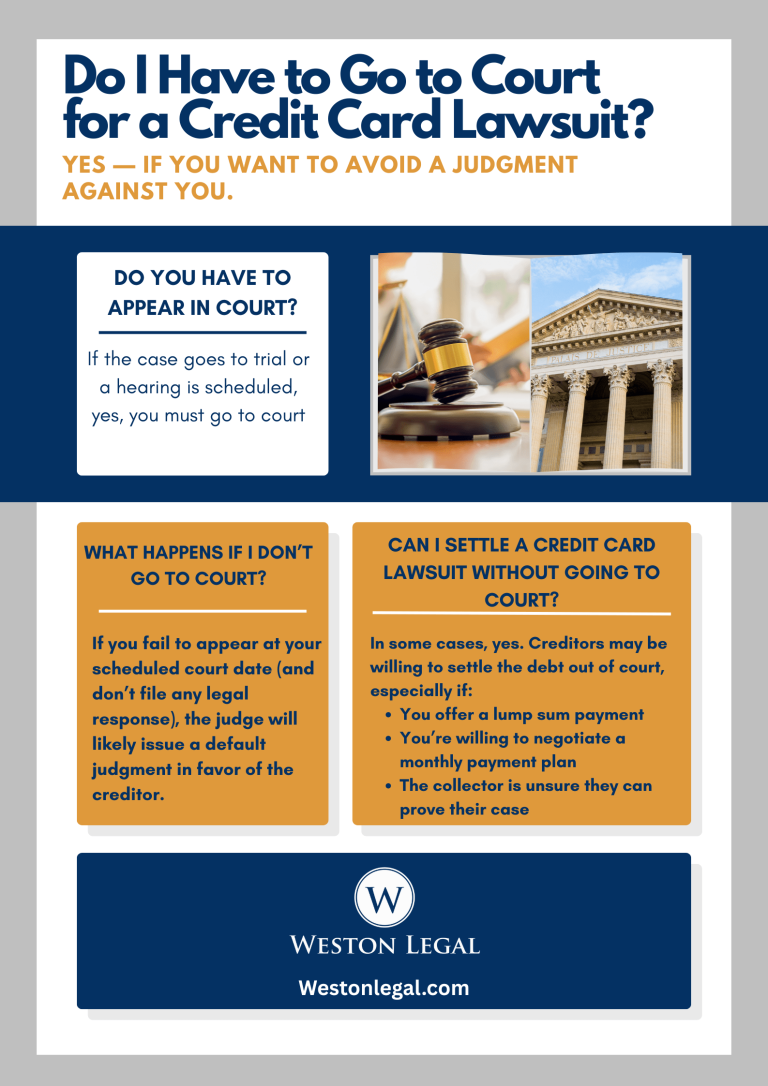
The short answer is: Yes — if you want to avoid a judgment against you.
The better option is to hire a lawyer to defend you and they will go to Court for you. We charge flat fees and payment plans, reach out to see if we can help.
Related Links
Table of Contents
🧾 What Happens When You’re Sued for Credit Card Debt
When a credit card company or debt collector sues you, they start by filing a complaint in civil court. You’ll then be served with legal documents — typically a summons and complaint — that explain:
Who is suing you
The amount they claim you owe
Your deadline to respond
When and where the court hearing may be scheduled
This lawsuit is a legal process, and unless you take action, the creditor will likely win by default.
❗ Do You Have to Appear in Court?
If the case goes to trial or a hearing is scheduled, yes, you must go to court — unless:
You’ve already settled the debt and the case has been dismissed
You’ve filed an Answer, and the court has ruled on the pleadings
You’ve reached another agreement (such as mediation or payment)
In most situations, skipping court leads to a default judgment, which gives the creditor the legal right to:
Garnish your wages
Levy your bank account
Place a lien on your property
Add court costs and interest to your balance
Even if you don’t think the debt is valid, the court will assume the creditor is right if you’re not there to say otherwise
🖊️ What If I File an Answer — Do I Still Need to Go?
Yes, even if you file a written Answer with the court, you’ll still need to attend any scheduled hearings or trial dates unless otherwise notified. The Answer tells the court your side of the story, but it doesn’t replace your physical presence in court if required.
Not showing up after filing an Answer may still result in a judgment against you.
🧠 What If I Can’t Afford to Pay the Debt?
Many people skip court because they feel there’s no point — especially if they can’t afford to pay the amount being claimed. But showing up is still in your best interest.
Here’s why:
You may be able to settle the debt for less than you owe
The creditor might not have enough proof to win
You could qualify for a hardship exemption or negotiate a payment plan
You might be able to raise defenses like identity theft or expired statute of limitations
🛡️ What Happens If I Don’t Go to Court?
If you fail to appear at your scheduled court date (and don’t file any legal response), the judge will likely issue a default judgment in favor of the creditor.
That means:
You automatically lose the case
You may owe more than the original amount due to legal fees and interest
Creditors can start collection actions like wage garnishment or asset seizure
A default judgment is difficult — though not impossible — to reverse. You’d typically need to show good cause for missing court, such as improper service or a medical emergency.
🤝 Can I Settle a Credit Card Lawsuit Without Going to Court?
In some cases, yes. Creditors may be willing to settle the debt out of court, especially if:
You offer a lump sum payment
You’re willing to negotiate a monthly payment plan
The collector is unsure they can prove their case
Always get settlement agreements in writing, and ask them to dismiss the case once terms are fulfilled. If the case is dismissed, you won’t need to go to court.
🧭 Tips If You Must Appear in Court
If your court date is approaching, follow these steps:
Arrive early and dress respectfully
Bring copies of any documents: statements, letters, proof of payment, contracts
Speak calmly and clearly
Be honest with the judge — if you need more time, you can ask for a continuance
Don’t panic — many judges are understanding if you’re making an effort to resolve the issue
Hire Weston Legal to Defend You
A way to avoid going to court is to hire an attorney to appear for you. If you reside in a state where we represent consumers sued for Debt. Reach out to us for assistance.

Mike Weston is a seasoned debt lawsuit defense attorney and founder of Weston Legal. Since 2005, Mike has devoted his career to compassionately helping consumers struggling with issues involving their personal and business debts. Mike is grateful to have been able to help tens of thousands of clients become empowered with knowledge on the path to financial stability.
Meet some of our Lawsuit Staff
Michael

Jessica

Andrew

Courtney

Trent

Reem
